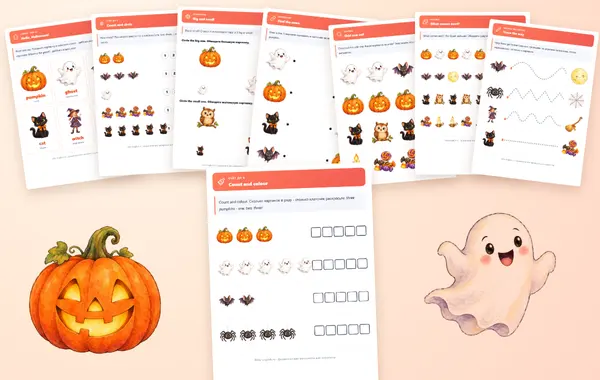


Хэллоуин (Halloween) отмечают 31 октября - в Великобритании, Ирландии, США, Канаде, Австралии и Новой Зеландии. Праздник вырос из кельтского Самайна больше 2000 лет назад, название пришло от All Hallows’ Eve - «канун Дня всех святых», а тыквенный фонарь раньше вырезали из репы. Обо всём этом - четыре текста на английском разного уровня: от пяти коротких абзацев для 1-3 класса до подробного текста для старшеклассников.
В каждом уровне: словарик, текст с переводом каждого абзаца, запись текста (британское произношение), задания и ответы для учителя. Тексты про историю, обычаи и страны, где празднуют Хэллоуин, - не одинаковые, а написаны заново под каждый уровень.
Выберите уровень. Печатается только открытый уровень: текст, задания и лист ответов (3 листа A4). Перевод на печать не выводится - лист остаётся английским. Не знаете уровень ученика - пройдите тест на уровень.
A1 · 1-3 класс · около 90 слов. Самый простой текст: короткие предложения в Present Simple - когда праздник, костюмы, тыква-фонарь и trick-or-treating.
Halloween
- autumn - осень
- holiday - праздник
- dress up - наряжаться
- costume - костюм
- witch - ведьма
- ghost - привидение
- pumpkin - тыква
- candle - свеча
- knock on the door - стучать в дверь
- sweets - конфеты
Halloween is on the 31st of October. It is an autumn holiday. People celebrate it in Britain, Ireland, the USA and Canada.
Перевод
Хэллоуин - 31 октября. Это осенний праздник. Его отмечают в Великобритании, Ирландии, США и Канаде.
On Halloween, children dress up. They are witches, ghosts, cats and pumpkins. Their costumes are black, orange and purple.
Перевод
На Хэллоуин дети наряжаются. Они - ведьмы, привидения, кошки и тыквы. Их костюмы чёрные, оранжевые и фиолетовые.
Families make jack-o’-lanterns. A jack-o’-lantern is a pumpkin with a funny face. There is a candle inside.
Перевод
Семьи делают фонари из тыкв - jack-o’-lantern. Это тыква со смешным лицом. Внутри горит свеча.
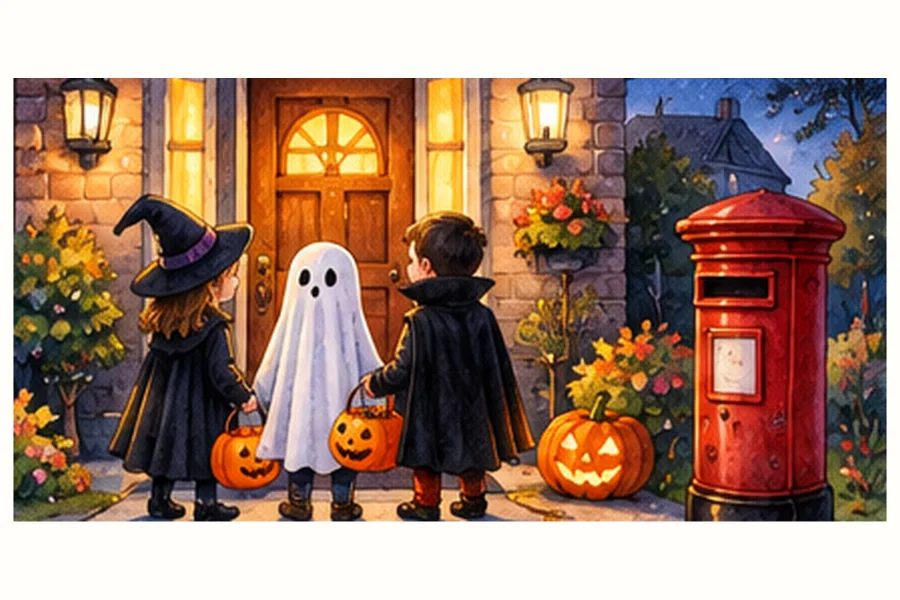
In the evening, children go trick-or-treating. They knock on the doors and say, “Trick or treat!” People give them sweets.
Перевод
Вечером дети ходят по домам за угощением. Они стучат в двери и говорят: «Сладость или гадость!» Люди дают им конфеты.
Children play games and eat apples and sweets. Halloween is fun! Happy Halloween!
Перевод
Дети играют в игры и едят яблоки и конфеты. Хэллоуин - это весело! Счастливого Хэллоуина!
Halloween - Tasks
- Halloween is on the 31st of October. ___
- Halloween is a winter holiday. ___
- A jack-o’-lantern is an apple. ___
- Children say, “Trick or treat!” ___
- People give children sweets. ___
- Halloween costumes are white and pink. ___
- Children ____________ as witches and ghosts.
- A jack-o’-lantern is a ____________ with a funny face.
- There is a ____________ inside the jack-o’-lantern.
- People give children ____________.
On Halloween I am a ________________________ .
Halloween - Answers
Задание 1: 1. T; 2. F (it is an autumn holiday); 3. F (it is a pumpkin); 4. T; 5. T; 6. F (black, orange and purple).
Задание 2: 7. dress up; 8. pumpkin; 9. candle; 10. sweets.
Задание 3 - свободный ответ: On Halloween I am a cat / a ghost / a witch / a pumpkin. Попросите ребёнка назвать цвет костюма: My costume is black.
A2 · 4-5 класс · около 160 слов. Немного истории в Past Simple: откуда пришёл праздник, почему фонарь раньше делали из репы, где Хэллоуин отмечают сегодня и что такое apple bobbing.
What Is Halloween?
- start (started) - начинаться (начался)
- more than - больше чем
- fairy - фея
- turnip - репа
- move (moved) - переезжать (переехали)
- neighbour - сосед
- superhero - супергерой
- bowl - миска
- teeth - зубы
- leaves - листья
Halloween is a holiday on the 31st of October. It is a very old holiday. It started in Ireland and Scotland more than 2,000 years ago. At that time, people thought that ghosts and fairies visited our world on this night.
Перевод
Хэллоуин - праздник 31 октября. Это очень старый праздник. Он появился в Ирландии и Шотландии больше 2000 лет назад. В то время люди думали, что в эту ночь в наш мир приходят привидения и феи.
Long ago, people in Ireland and Scotland made lanterns from turnips. Then many Irish families moved to America. There were lots of big pumpkins there, so people started to make lanterns from pumpkins. Today we call them jack-o’-lanterns.
Перевод
Давным-давно в Ирландии и Шотландии фонари делали из репы. Потом многие ирландские семьи переехали в Америку. Там было много больших тыкв, поэтому фонари стали делать из тыкв. Сегодня мы называем их jack-o’-lantern.
Today, Halloween is popular in the USA, Canada, Britain, Ireland and Australia. Children dress up as witches, vampires, superheroes and animals. They go from house to house and say, “Trick or treat!” Their neighbours give them sweets.
Перевод
Сегодня Хэллоуин популярен в США, Канаде, Великобритании, Ирландии и Австралии. Дети наряжаются ведьмами, вампирами, супергероями и животными. Они ходят от дома к дому и говорят: «Сладость или гадость!» Соседи угощают их конфетами.
There are Halloween parties with games, too. In a popular game called apple bobbing, you try to catch an apple in a bowl of water with your teeth! The colours of Halloween are orange and black: orange for pumpkins and autumn leaves, black for the long, dark nights.
Перевод
Ещё на Хэллоуин устраивают вечеринки с играми. В популярной игре apple bobbing нужно поймать зубами яблоко в миске с водой! Цвета Хэллоуина - оранжевый и чёрный: оранжевый - как тыквы и осенние листья, чёрный - как длинные тёмные ночи.
What Is Halloween? - Tasks
- Halloween started in America. ___
- Halloween is more than 2,000 years old. ___
- The first lanterns were made from turnips. ___
- Many Irish families moved to America. ___
- In apple bobbing, you catch an apple with your hands. ___
- Black is the colour of the long, dark nights. ___
- When is Halloween? ________________________________
- Why did people in America make lanterns from pumpkins? ________________________________
- What do children say at the door? ________________________________
- Name three countries where people celebrate Halloween. ________________________________
| Объяснение | Слово |
|---|---|
| 11. A person who lives next to you. | ____________ |
| 12. A small magic person with wings. | ____________ |
| 13. Clothes you wear to look like a witch or a superhero. | ____________ |
| 14. A round white and purple vegetable. | ____________ |
| 15. A light you can carry. | ____________ |
I’d like to be a ____________ because ________________________________ .
My costume is ____________ and ____________ .
What Is Halloween? - Answers
Задание 1: 1. F (in Ireland and Scotland); 2. T; 3. T; 4. T; 5. F (with your teeth); 6. T.
Задание 2: 7. On the 31st of October. 8. Because there were lots of big pumpkins there. 9. “Trick or treat!” 10. Any three: the USA, Canada, Britain, Ireland, Australia.
Задание 3: 11. neighbour; 12. fairy; 13. costume; 14. turnip; 15. lantern.
Задание 4 - свободный ответ.
B1 · 6-8 класс · около 300 слов. Текст с подзаголовками: кельтский праздник Самайн, откуда слово Halloween, обычай guising, как тыква заменила репу, где праздник популярен сегодня и пара неожиданных фактов.
Halloween: Old and New
- harvest - урожай, сбор урожая
- believe - верить, считать
- spirit - дух
- bonfire - большой костёр
- disguise - маскировка, переодевание
- recognise - узнавать
- carve - вырезать
- decorate - украшать
- path - дорожка, путь
- weigh - весить
An ancient festival
Halloween began as Samhain (say “SOW-in”), a festival of the Celts, who lived in Ireland, Scotland and other parts of Europe more than 2,000 years ago. Samhain marked the end of the harvest and the start of winter. The Celts believed that on this night the line between our world and the world of spirits became very thin. They lit huge bonfires and sometimes wore disguises so that the spirits wouldn’t recognise them.
Перевод
Хэллоуин начался с Самайна - праздника кельтов, которые больше 2000 лет назад жили в Ирландии, Шотландии и других частях Европы. Самайн отмечал конец сбора урожая и начало зимы. Кельты верили, что в эту ночь граница между нашим миром и миром духов становится совсем тонкой. Они разжигали огромные костры и иногда переодевались, чтобы духи их не узнали.
Where does the name come from?
Later, the Church made the 1st of November All Saints’ Day, which was also called All Hallows’ Day. The evening before it became All Hallows’ Eve, and little by little the name changed to Halloween.
Перевод
Позже церковь сделала 1 ноября Днём всех святых, который также называли All Hallows’ Day. Вечер накануне стал называться All Hallows’ Eve, и постепенно название превратилось в Halloween.
Old traditions travel
In Scotland and Ireland, children went “guising”: they put on disguises and visited their neighbours, where they sang a song or told a joke and got fruit, nuts or coins. Lanterns were carved from turnips. In the 19th century, many Irish and Scottish people moved to North America and took their traditions with them. Pumpkins grew there and were much easier to carve, so the jack-o’-lantern became orange. Trick-or-treating became popular in the USA in the middle of the 20th century and later came back across the ocean to Britain.
Перевод
В Шотландии и Ирландии дети ходили «гайзинг»: переодевались и навещали соседей - пели песню или рассказывали шутку и получали фрукты, орехи или монетки. Фонари вырезали из репы. В XIX веке многие ирландцы и шотландцы переехали в Северную Америку и привезли туда свои традиции. Там росли тыквы, и вырезать их было гораздо легче, поэтому фонарь стал оранжевым. Обычай trick-or-treating стал популярным в США в середине XX века, а потом вернулся через океан в Британию.
Halloween around the world
Today Halloween is most popular in the USA and Canada, where people decorate their houses with pumpkins, paper bats and coloured lights. It is also celebrated in Ireland, where schools have a week’s holiday at the end of October, and in Britain, Australia and New Zealand. In many other countries, it is mostly a party for young people and for English classes.
Перевод
Сегодня Хэллоуин популярнее всего в США и Канаде, где дома украшают тыквами, бумажными летучими мышами и цветными огоньками. Его отмечают и в Ирландии, где в конце октября у школьников неделя каникул, и в Великобритании, Австралии и Новой Зеландии. Во многих других странах это скорее вечеринка для молодёжи и для уроков английского.
Did you know?
In Britain, a black cat crossing your path is often thought to be lucky, but in many other countries people believe it brings bad luck. And some pumpkins grown for competitions weigh more than a tonne - as much as a small car!
Перевод
В Британии чёрная кошка, перебежавшая дорогу, часто считается к удаче, а во многих других странах верят, что она приносит несчастье. А некоторые тыквы, выращенные для конкурсов, весят больше тонны - как маленький автомобиль!
Halloween: Old and New - Tasks
- Samhain marked the start of summer. ___
- The Celts lit bonfires on Samhain. ___
- The word “Halloween” comes from “All Hallows’ Eve”. ___
- The Celts ate pumpkin soup at Samhain. ___
- Pumpkins were taken to America from Ireland. ___
- Children in Ireland have a week off school at the end of October. ___
- Why did the Celts wear disguises? ________________________________
- What did children do and get when they went guising? ________________________________
- Why did the jack-o’-lantern become orange? ________________________________
- When did trick-or-treating become popular in the USA? ________________________________
- What does a black cat mean in Britain? ________________________________
| Объяснение | Слово |
|---|---|
| 12. The time when farmers collect fruit and vegetables. | ____________ |
| 13. A very big fire outside. | ____________ |
| 14. Clothes that hide who you are. | ____________ |
| 15. To know who someone is when you see them. | ____________ |
| 16. To cut a shape or a face into something. | ____________ |
| 17. To make a place look pretty for a holiday. | ____________ |
Halloween: Old and New - Answers
Задание 1: 1. F (the start of winter); 2. T; 3. T; 4. NS; 5. F (pumpkins grew in America); 6. T.
Задание 2 (примерные ответы): 7. They wore disguises so that the spirits wouldn’t recognise them. 8. They sang a song or told a joke and got fruit, nuts or coins. 9. Because pumpkins grew in North America and were much easier to carve than turnips. 10. In the middle of the 20th century. 11. It is often thought to be lucky.
Задание 3: 12. harvest; 13. bonfire; 14. disguise; 15. recognise; 16. carve; 17. decorate.
Задание 4 - свободный ответ. Что можно отметить: и там, и там дети ходят по домам, поют и получают угощение, часто в костюмах; колядуют зимой, на Святки, а guising - осенью, в конце октября.
B2 · 9-11 класс · около 460 слов. Самый подробный текст: корни праздника, стихотворение Роберта Бёрнса, переселение ирландцев в Америку, Хэллоуин в США, Ирландии и Британии, чем от него отличается мексиканский День мёртвых - и споры о празднике.
Halloween: From Ancient Fires to Pumpkin Lanterns
- roots - корни, истоки
- boundary - граница
- spread - распространяться
- gradually - постепенно
- fortune-telling - гадание
- famine - голод (бедствие)
- native - местный, родной для этих мест
- commercial - коммерческий
- display - украшение, композиция
- wealth - богатство
- marigold - бархатец (цветок)
- confuse - путать
An ancient festival
Halloween’s roots go back more than two thousand years to Samhain, a Celtic festival held at the end of October. The Celts divided the year into a light half and a dark half, and Samhain marked the beginning of the dark one. It was believed that on this night the boundary between the human world and the spirit world grew thin, so people lit bonfires on the hills and wore disguises to hide from any spirits passing by.
Перевод
Корни Хэллоуина уходят больше чем на две тысячи лет назад - к Самайну, кельтскому празднику в конце октября. Кельты делили год на светлую и тёмную половины, и Самайн отмечал начало тёмной. Считалось, что в эту ночь граница между миром людей и миром духов становится тонкой, поэтому на холмах разжигали костры и переодевались, чтобы спрятаться от проходящих мимо духов.
From All Hallows’ Eve to Halloween
As Christianity spread, the Church placed All Saints’ Day on the 1st of November; “hallow” is an old English word for a saint. The evening before, All Hallows’ Eve, was gradually shortened to “Hallowe’en”. In 1785, the Scottish poet Robert Burns wrote a poem called “Halloween”, describing the games and fortune-telling of a Scottish country night.
Перевод
Когда распространилось христианство, церковь назначила День всех святых на 1 ноября; hallow - старое английское слово, означающее «святой». Вечер накануне, All Hallows’ Eve, постепенно сократился до Hallowe’en. В 1785 году шотландский поэт Роберт Бёрнс написал стихотворение «Halloween» - об играх и гаданиях в шотландской деревне в эту ночь.
Crossing the Atlantic
The holiday we know today was shaped as much in America as in Europe. In the 1840s, during a terrible famine, more than a million Irish people left for the USA. They took their customs with them, including guising and turnip lanterns. Pumpkins, which are native to America and larger and softer than turnips, soon replaced them. By the middle of the 20th century, trick-or-treating had become a national custom in the USA, and films and television later carried it back to Britain - although British children still ask for “sweets” rather than “candy”.
Перевод
Праздник, который мы знаем сегодня, сложился в Америке не меньше, чем в Европе. В 1840-е годы, во время страшного голода, больше миллиона ирландцев уехали в США. Они взяли с собой свои обычаи - и guising, и фонари из репы. Тыквы, которые растут в Америке и крупнее и мягче репы, вскоре их заменили. К середине XX века trick-or-treating стал общенациональным обычаем в США, а фильмы и телевидение позже вернули его в Британию - хотя британские дети по-прежнему просят sweets, а не candy.
Halloween today
In the USA, Halloween is one of the biggest commercial holidays of the year: people spend billions of dollars on costumes, sweets and decorations, and some streets compete for the most impressive display. In Ireland, it is a real festival: children get a week off school, and families eat barmbrack, a fruit bread with small objects baked inside - finding the coin is said to bring wealth. The city of Derry in Northern Ireland holds one of the largest Halloween festivals in Europe, with parades and fireworks. In Britain, the excitement is shared with Bonfire Night, which follows on the 5th of November.
Перевод
В США Хэллоуин - один из самых коммерческих праздников года: люди тратят миллиарды долларов на костюмы, сладости и украшения, а некоторые улицы соревнуются, у кого оформление эффектнее. В Ирландии это настоящий праздник: у детей неделя каникул, а семьи едят бармбрэк - фруктовый хлеб с запечёнными внутри маленькими предметами; говорят, кому попадётся монетка, тот разбогатеет. Город Дерри в Северной Ирландии проводит один из крупнейших в Европе фестивалей Хэллоуина - с парадами и фейерверками. В Британии праздничное настроение делит с Хэллоуином Ночь костров, которая наступает 5 ноября.
Not the same holiday
Many people confuse Halloween with Mexico’s Day of the Dead (Día de Muertos) on the 1st and 2nd of November, but it is a different celebration. Families decorate their homes with bright orange marigolds, candles and photos to remember relatives who are no longer with them - in a warm and joyful way rather than a frightening one.
Перевод
Многие путают Хэллоуин с мексиканским Днём мёртвых (Día de Muertos) 1 и 2 ноября, но это другой праздник. Семьи украшают дома яркими оранжевыми бархатцами, свечами и фотографиями, чтобы вспомнить родных, которых уже нет рядом, - тепло и радостно, а не страшно.
A holiday that keeps changing
Not everyone welcomes Halloween. Some people feel it has become too commercial, while others see it as a chance for neighbours to meet and for children to be creative. In Russia, it is not a traditional holiday, but many teachers of English use it to bring the culture of English-speaking countries into the classroom. Whatever you think of it, Halloween shows how a festival can travel across centuries and oceans and still keep changing.
Перевод
Не все рады Хэллоуину. Одни считают, что он стал слишком коммерческим, другие видят в нём повод для соседей встретиться, а для детей - проявить фантазию. В России это не традиционный праздник, но многие учителя английского используют его, чтобы познакомить учеников с культурой англоязычных стран. Как к нему ни относись, Хэллоуин показывает, как праздник может путешествовать через века и океаны и продолжать меняться.
Halloween: From Ancient Fires to Pumpkin Lanterns - Tasks
- Samhain marked
a) the start of the harvest b) the beginning of the dark half of the year c) the Roman New Year - The word “hallow” originally meant
a) an evening b) a saint c) a ghost - Pumpkins replaced turnips because they
a) were cheaper in Ireland b) grew in America and were easier to carve c) were described by Robert Burns - Barmbrack is
a) a fruit bread b) a parade in Derry c) a kind of lantern - The Day of the Dead is
a) the Mexican name for Halloween b) a different celebration to remember relatives c) a Celtic festival - The author’s main idea in the last paragraph is that Halloween
a) should not be celebrated b) has not changed for centuries c) keeps travelling and changing
- In Ireland, Halloween is a ____________ (TRADITION) family holiday.
- The ____________ (CELEBRATE) in Derry last several days.
- Some people think the holiday has become too ____________ (COMMERCE).
- Making a costume helps children to be ____________ (CREATE).
- The name All Hallows’ Eve ____________ (GRADUAL) changed to Halloween.
- Some streets compete for the most ____________ (IMPRESS) display.
Halloween: From Ancient Fires to Pumpkin Lanterns - Answers
Задание 1: 1. b; 2. b; 3. b; 4. a; 5. b; 6. c.
Задание 2: 7. traditional; 8. celebrations; 9. commercial; 10. creative; 11. gradually; 12. impressive.
Задание 3 - свободный ответ. План: вступление с мнением; аргумент 1 (знакомство с культурой и языком); аргумент 2 (праздник объединяет класс); возражение и ответ на него (свои традиции важнее - но одно не мешает другому); вывод. Полезные связки: In my opinion, … ; Firstly, … ; What is more, … ; On the other hand, … ; To sum up, …
Как работать с текстом
- До чтения. Спросите: What do you know about Halloween? Where do people celebrate it? Запишите идеи на доске, после чтения проверьте, что подтвердилось.
- Словарик. Разберите слова до текста. Младшим можно показать флэшкарты «Halloween».
- Слушаем и читаем. Включите запись и попросите следить по тексту, потом прочитать абзац вслух. Перевод открывайте только после того, как ученик попробовал понять сам.
- Два уровня в одном классе. Тексты A2 и B1 рассказывают об одном и том же - слабым ученикам можно дать A2, сильным B1, а обсуждать вместе.
Ещё к празднику: рабочий лист «Halloween in Britain» - рассказ мальчика из Йорка, слова и фразы Хэллоуина с транскрипцией, стихи про Хэллоуин, конспект урока, филворд и кроссворд. А через пять дней после Хэллоуина в Британии - Ночь Гая Фокса. Все материалы - на странице «Хэллоуин».